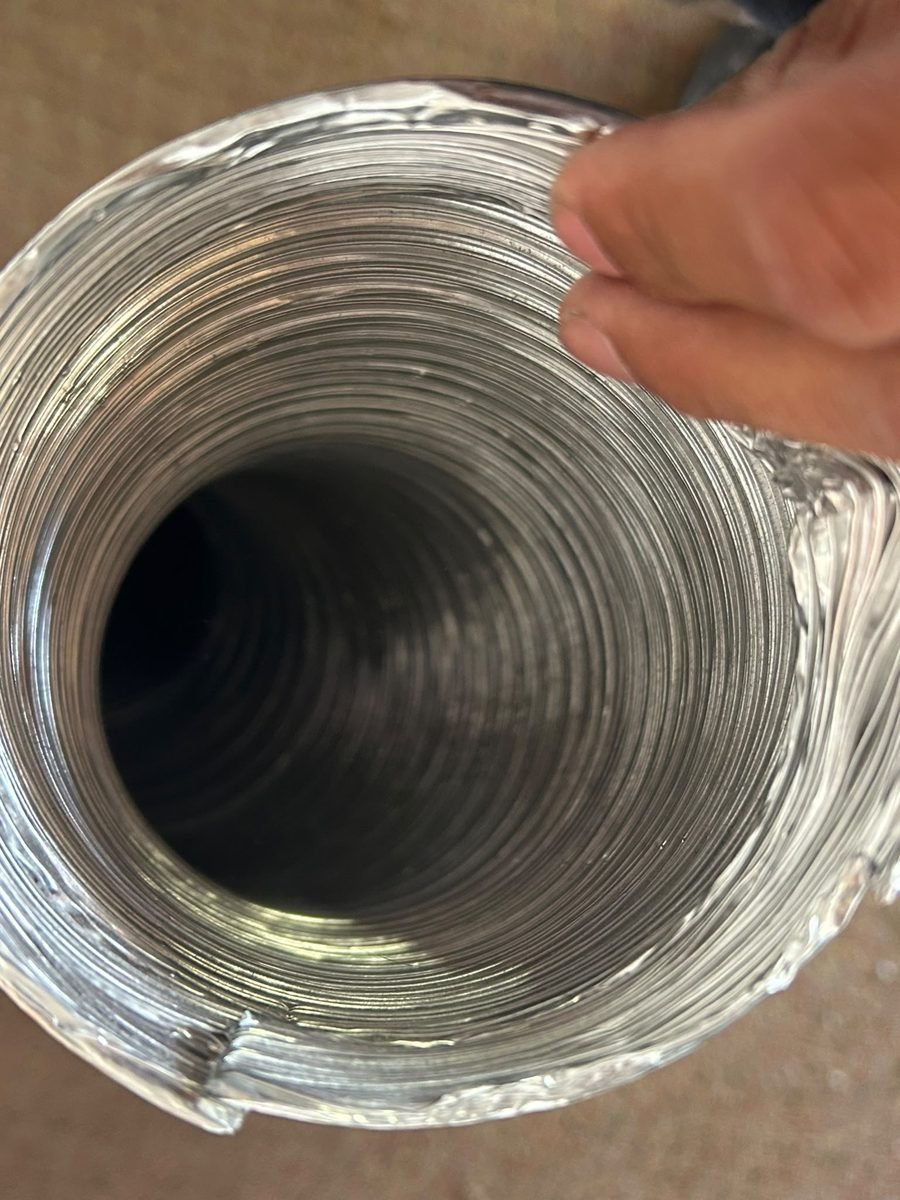
What's behind your dryer
Most dryers connect to the wall with a short transition hose. In many homes it's a thin, accordion-style foil or white plastic hose. It's cheap and easy to install, which is why it's so common.
The problem with foil and plastic
These hoses crush when the dryer is pushed back against the wall. Their deep ridges catch lint, and they sag into low spots where lint collects. A crushed or sagging hose restricts airflow, so the dryer runs hotter and longer.
Why metal is better
Rigid metal duct and semi-rigid aluminum duct hold their shape, have smoother walls and don't crush as easily. They let air move freely and are easier to clean.
What we do
During a dryer vent cleaning we check the transition hose. If it's foil or plastic, crushed or torn, we can replace it with metal ducting and seal the connections, so the dryer vents properly.
Quick check you can do
Pull the dryer out and look at the hose. If it's white plastic, thin foil, flattened, kinked or torn, it should be replaced.